


In this article we will examine how-to’s, starting with the concepts of counter-custody and lock breaching. The techniques in this article apply to extremely simple, generally known, low security/threats. It is written to raise awareness of individual defense and to draw attention to entry-level physical security factors for security researchers.
Do not try in situations where you do not have legal authorization. Do not try it on locks you are actively using, it may break. Use this information to the extent permitted by law, what people do with this information is entirely their own responsibility.
This article is a prototype article. Content may change over time.
– 7.05.2025 First written
Where Did I Get The Inspiration For This Article?
Ed Calderon is a Latino origined American security expert who used to police in the US-Mexico border.

If you want to get to know him better, you can check these links:
https://www.instagram.com/manifestoradiopodcast/
İnstagram
Due to analysis and information content, the instagram account may change, if the link is invalid, you can find the current version by googling.
https://open.spotify.com/show/6692abnENuAkHRP7EsxizP
Manifesto Radio Podcast
You can find episodes of his podcast.
https://open.spotify.com/episode/3gMJXSMPYX8kbLVlQ7DXL6
Episode where he was a guest at theJoe Roegan’s podcast
Kendisi ve lariyeri hakkında çok daha fazla bilgiye buradan ulaşabilirsiniz.
https://www.edsmanifesto.com/
His website
You can find his biography, blog, digital content and trainings here.
If we are inspired enough, let’s get started.
What is Counter Custody?
In order to understand counter-custody as a concept, we will first examine the point at which it divides into legal and illegal, and its terminological meaning.
At a quick glance, “detention” and “custody” seem to have close meanings.
Merriam Webster is the first dictionary publisher in the United States and the oldest dictionary publisher in all of the similar companies in the United States today.
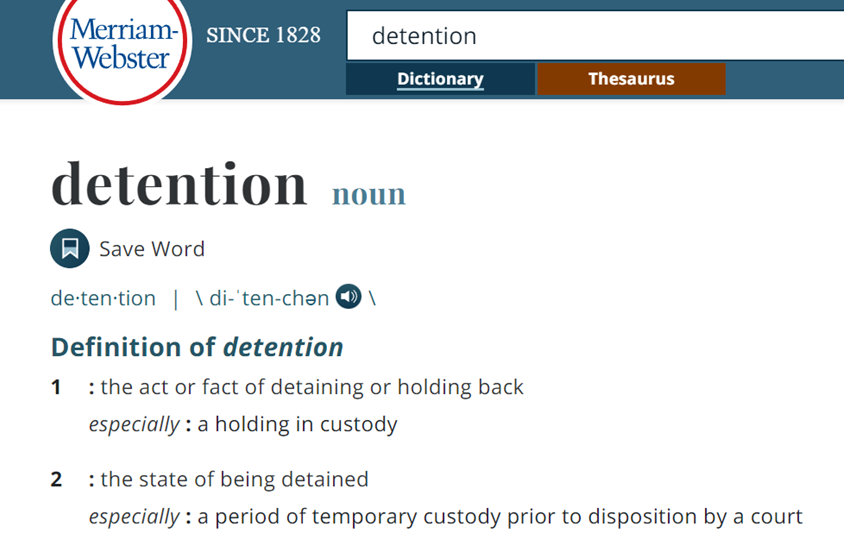
For the word “detention” we see the definitions “the act or fact of taking into custody or holding back” and “the state of being in custody”.
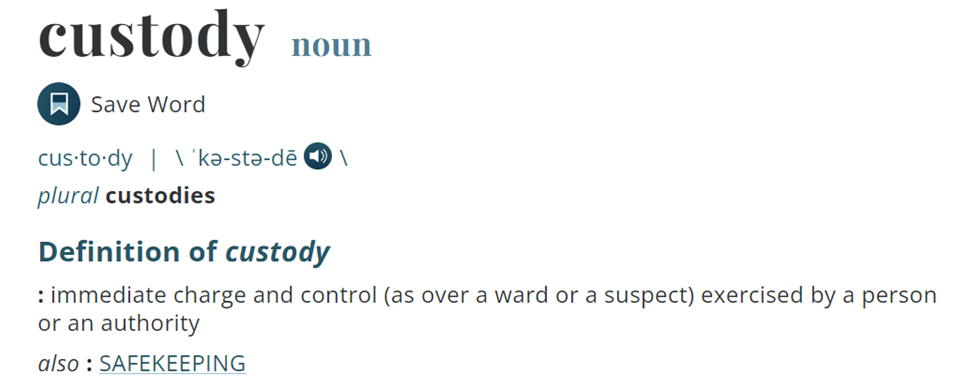
For the word “Custody” we see the definition “Charge and control (as over a ward or suspect) exercised immediately by a person or an authority”.
When we examine the definitions, we see that the English definition of “Counter Custody” means “avoidance against legally authorized restraint”. Today, if we examine this concept from foreign sources, we can see that there are many written, digital, course-like resources with this name. The fact that a market accepted with this form of address exists and is accepted as of now shows that we need to go back a little further to understand the meaning of this concept.
If we think about the superheading that gave rise to this concept and the way it has spread in history to reach the masses, it seems logical to think that it emerged as a subheading of the issues of protecting important people and sustaining life in a risky area, and that it first stepped onto the stage of history with a focus on military use. Given its military origins, and the fact that the civilian market’s commercial interest in protection was often first nurtured by ex-soldiers, the pieces seem to fall into place in a logical way.
If we were to redefine it with the right choice of word specific to the civilian market, taking into account modern meanings, it would seem to be “captivity”. Looking at the meaning again from Merriam Webster, it seems more appropriate than other words. But I have not done a long research to suggest this alternative. When writing dictionaries, it should be kept in mind that the definition of words is written according to the usage of the majority of the public and can be changed over time.
POPULAR WRIST RESTRAINTS AND THEIR ESCAPE METHODS
If we think of wrist restraint devices, most of us will think of similar things. Rope, zip ties, tape and cuffs. Ed Calderon has a quote I like very much. He says, “All restraints are temporary.” So all restraints really are temporary. You may be surprised, but you can get rid of all these restraints as long as you have the advantage of information (intelligence). The purpose of this article is to provide this information advantage to its readers.
– Escape From Zip Tie

This GIF was cut from a relevant youtube video. You’ve often seen zip cords used to restrain people in movies and TV shows. These scenes usually depict people mentally giving up after the cables are attached. As Sun Tzu said, the battle is fought in the mind, not in the field. There is nothing we can do for someone who has mentally given up. But if you are of the “never give up” mindset like me, then let’s look at how to get out of zip ties, which is one of the easiest restraints to get rid of.
In today’s criminal world, zip cables are also popularly used by law enforcement agencies. The escape technique that is the subject of this thread is against the simplest method of restraint with zip ties. There are more advanced methods to restraint on zip ties than this, but I will not cover them in this article because I want to keep it as an introductory level. But when you read this whole article you can improvise ways to how to get rid of advanced restraints.
Now let’s break down the process into simple steps:
- Usually using the mouth, the exposed end of the zip cord is pulled to make it as narrow as possible. (Anything possible can be used to pull the zip tie to make it narrower.) Don’t worry, the narrowness is not a risk as we will get rid of it in a moment. Keep your wrists close together while doing this because we want them to be as narrow as possible.
- Raise your hands approximately at or slightly above your head level.
- We aim to put extreme sudden load on the junction formed by the zip cord. With your elbows out to the sides, hit this junction with all your strength towards your diaphragm. Remember to contract your diaphragm while doing this. Preferably take a deep breath beforehand. After you begin to exhale, start the action. If you let out a war cry at the same time as you exhale through the diaphragm, you will be able to get rid of these simple restraints easily, even without breaking a sweat, accompanied with a very colorful look.
If you have carried out the whole process correctly, the zip cable has suddenly burst open.
So what was the logic behind it? For this we will start by examining how zip cables work.
What is the Work Logic of Zip Ties?
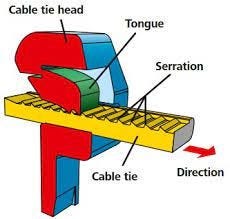
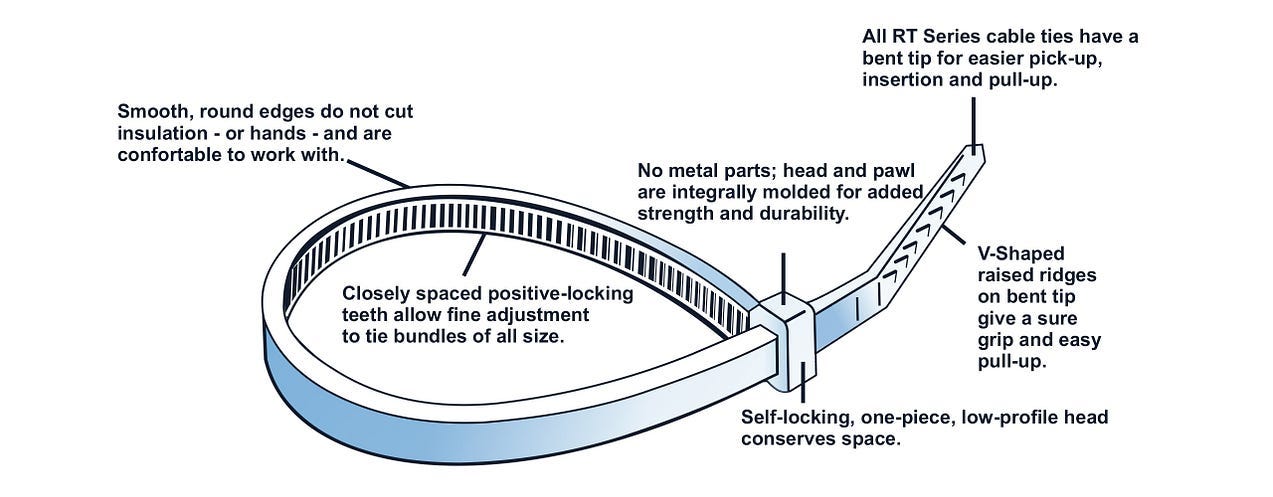
Zip ties are known by many names. It can be called by various names such as plastic clamp or zip cable.
The work logic is quite simple. They are usually made of flexible plastic material. While one side of the cable is smooth, the other side consists of teeth inclined in the forward direction. This makes it very easy to tighten and impossible to go back. The large tongue, which is designed to be attached to these teeth and flexes easily to one side, is attached to these lower serrations and forms the locking mechanism. Based on this logic, the features of this material that makes it really effective, and also its weak point, its breaking point, if you know what to do with it. As you can see, this is a matter of mind-set.
The feature, that we use to break the zip cable to get out of it, is the serrated teeth which form this locking mechanism. Because the cable is flexible, we need to compress it. There are several factors that affect this equation. Let’s imagine that we have two pieces of metal with sharp corners that regularly make small movements, and we use a zip cable to attach them in a non-tight fit. Over time, the metal parts with sharp corners will deform the edges of the zip cable with their movements. But since the human wrist does not have sharp corners and the muscle and skin tissue is flexible, we will have to remove this flexibility from the equation. This is the reason why we tighten the cable before bursting it.
The next step is to apply dynamic load to the cable. With the shock we apply, we turn the teeth of the cable, which we have already made tight enough and increased its static load, into a breaking point. As you can see, if you can create the right mindset, all constraints become temporary.
– Escaping From Rope Restraints
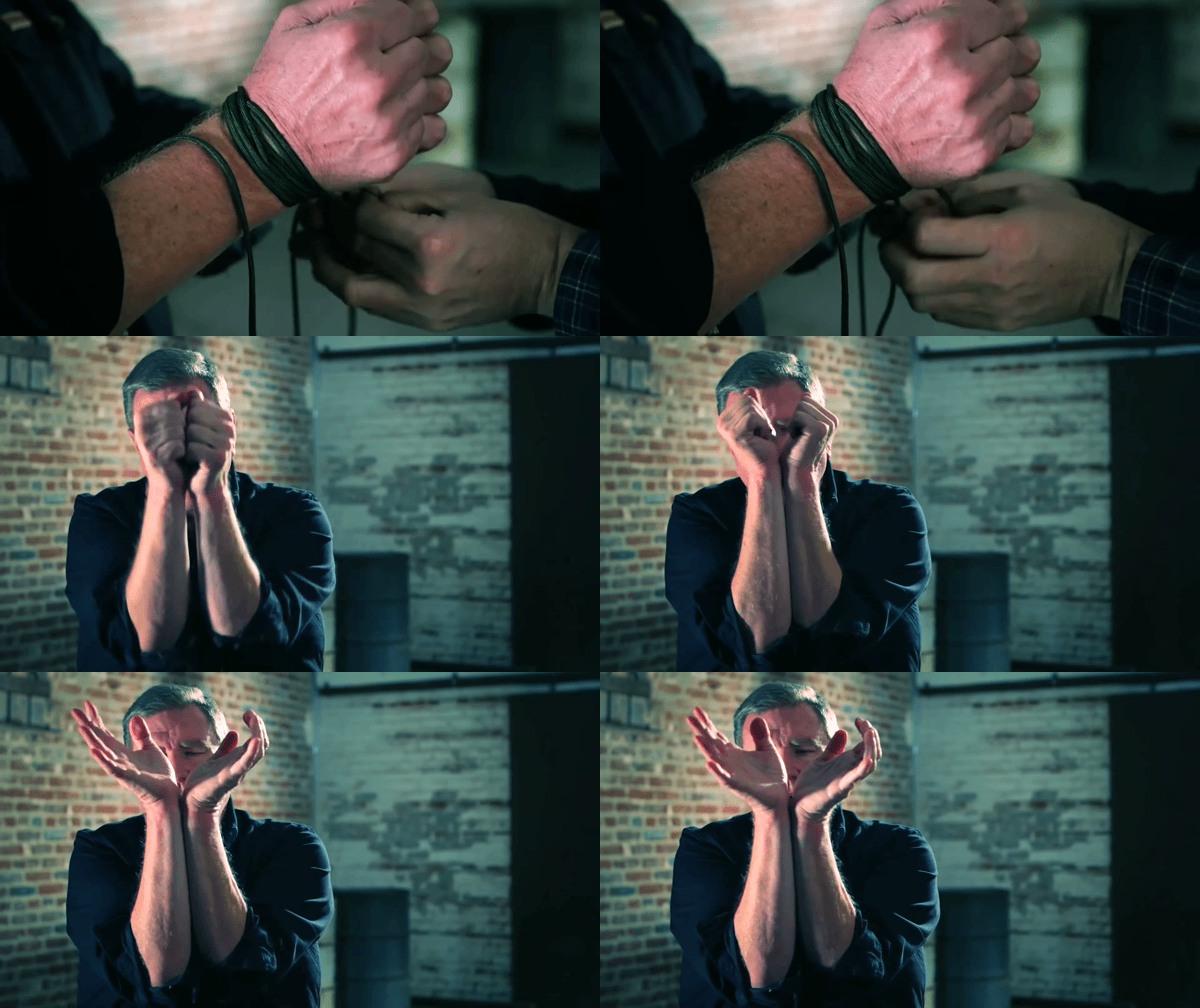

These GIFs are excerpted from a related youtube video.
Rope was the most popular choice before the industrial product zip cable took its place on the stages of history. If you research enough, you can see that it has been used as a restraint by law enforcement throughout history and sophisticated techniques have been developed to do so. In this article, we will look at a scenario where it is used only as a wrist restraint with a very simple knotting technique.
This technique, which is quite simple in logic, requires some effort and time. Don’t worry, this is not the only technique. When we examine the working logic, you will be able to discover new techniques yourself.
We will use the elasticity of the rope to untie the knot. Let’s analyze the process in simple steps.
- To take advantage of this technique, if you contract your muscles while your wrists are restricted, you will get an extra width that you can use later in the unraveling phase. But if you tighten your muscles too much, it can be noticeable.
- You need to move your wrists back and forth, left and right quite a lot. When you do this for a long time, you can easily observe the rope moving, and changing its state. In the same way that you may have observed when your shoelaces are untied on rare occasions, this also produces a relaxation of the knot, which occurs with a twisting and a stretching.
- Doing this for a long time will create gaps where you can move your hand or loosen the rope.
What is The Work Logic of The Rope?
The rope has a rough surface, just like the zip cable. But it also is flexible. The fact that its surfaces’ roughness is much smaller than that of a zip cord removes the possibility of it breaking like a zip cord from the equation. These small prongs allow the rope to hold when knotted. But these teeth, which do not interlock, also allow it to loosen. Another important aspect of rope slackening is how the load is applied. As we know from shoelaces, a load applied from one side can tighten the rope, while a load applied from another side can easily loosen it. But it can be deformed in the same way as zip cords and metal parts. Speaking of deforming, you can deform a rope with a zip cord. This is pocket knowledge in a throw-it-in-the-pocket kind of way. In fact, if kidnap risk is on your threat profile, you might actually consider keeping a zip cable in your pocket.
The fact that rope has a much higher flexibility than a zip cord is also its weak point. If you think that we have understood the weakness of flexible materials, let’s talk about inflexible materials, our next topic is the handcuffs.
Escape from Handcuffs
We can say that handcuffs are very fun toys. The fact that they are customized tools for their purpose offers opportunities to make overcoming them much more colorful. But unlike the others, we need to read the instructions before playing with these toys. Lets see.
How the Handcuff Works

As we can see in the photo, the internal mechanism is similar to a zip cable. Only it contains more metal and has extra parts to disengage the locking mechanism so that it can be reused.
The teeth system is the same logic as the zip cable. The keyhole lifts the lock bar over the teeth when the key is inserted and turned to the side, and the shackle can move in the opposite direction from where it came from. The lock spring, on the other hand, pushes the lock bar over the teeth during use, keeping the shackle permanently locked.
Now let’s take a step back in this dance and look at colorful exit tactics.
- Disabling the mechanism
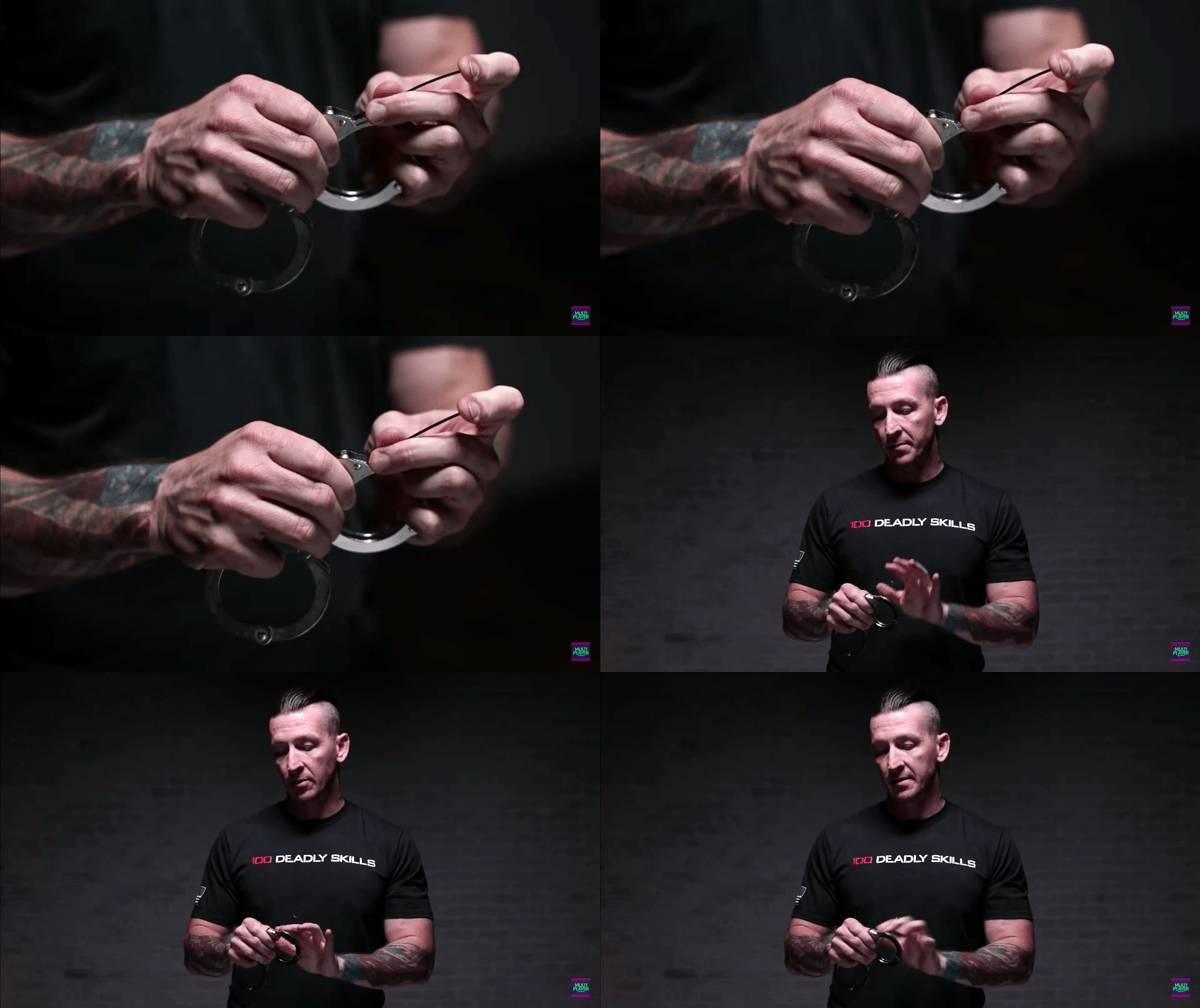
The GIFs here are again taken from Clint Emerson’s youtube video on the subject. You can check out his book 100 deadly skills and the video series related to his book.
The first method is to disable the locking mechanism by inserting an object between the teeth of the shackle and the lock bar. A small zip cable is used for this in the video. I had a very interesting discovery on this subject, but very authorized brothers told me to not to make it public 😂.

2. Breaking the handcuffs
In the video, Clint Emerson uses a seat belt buckle for this example. He warns that this method creates sharp metal points when breaking the handcuff, and that you may cut your wrist a little when trying.
But is there only one way to break a handcuff? Of course, this is again a matter of mind-set. There is a video filmed by the police of a Mexican criminal, tangling and applying pressure with his wrists to the chain of a handcuff and then applying force to break it, and he breaks them like he breaks pretzels. Also like the zip cable logic, if you apply excessive force in the opposite direction of the lock, you can turn the teeth into a breaking point.
What could you do if you could prepare in advance? Think 3D!
As we have seen so far and will see in the rest of this article, if the possibility of being detained is part of your threat profile, the best course of action is to prepare in advance. But what other tactics can you use to prepare in advance to get out of handcuffs?

The simplest answer is to carry a handcuff key. Usually handcuff keys are the same. There are about 3 or 4 types of handcuff keys on the general use. Special law enforcement agencies may use handcuffs made specifically for their units, in which case this tactic will not work. But most of the handcuffs you can find of the shelf products have the same key or similar keys.
The second tactic is to use technology. Printing handcuff keys with 3D printers, which one of today’s most fun technological gadgets. I will update here when I know more about it, but for now, just know that it is an option.
So is it that easy to be the Man Who Whispers into Handcuffs?
The answer is both yes and no. It is true that these tactics will not work in specific situations. That’s why we examine how it works and examples, so that if you find yourself in that situation, you can get out of it by developing improvised tactics not mentioned here.
Let’s examine an interesting and fun example of carrying a handcuff key.
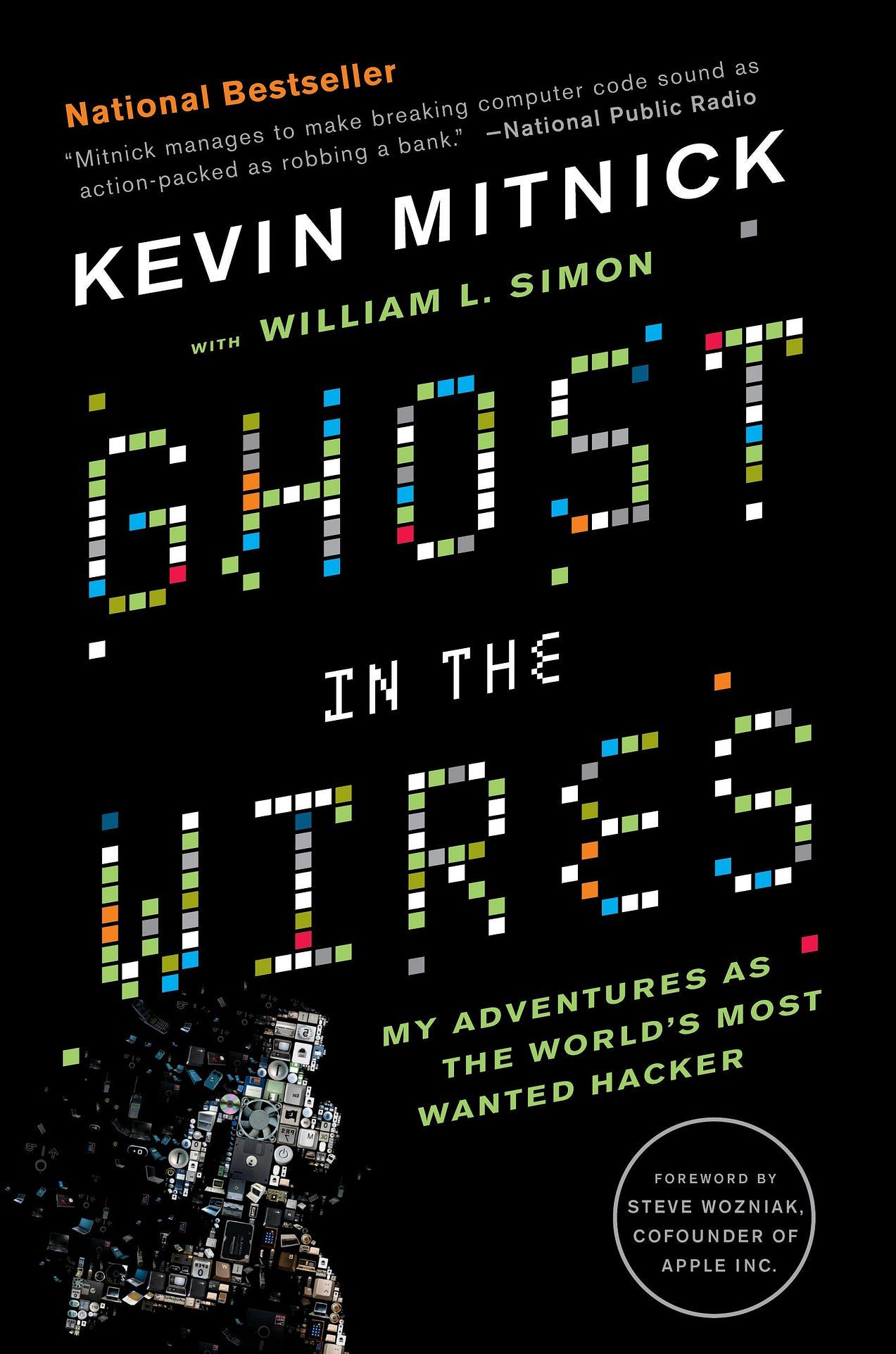
Kevin Mitnick, recently deceased, was a famous hacker who clashed with lawmakers in the pre-2000s and even influenced America’s Computer Fraud and Abuse Act (CFAA), which deals with hacking. Don’t worry, he, too, found the right path in his own life by switching to the white side after getting his thrill. He founded a company that provides cybersecurity awareness services with a particular focus on cryptography and password cracking, and the story of how the company was founded is also very interesting.
But for this article we will focus on just one memory of this legendary man. If you are interested, you can read his autobiography Ghost in the wires, which is available in many langs.
In one part of the book, he and his close friend use a computer lab at a university. Of course, their harmful actions are noticed by the school. In America there are units called campus police, the school immediately notifies the campus police and they handcuff these two friends and take them to the police station at the school and put them into an hallway whiel they are dealing with some other stuff. Luckily the place is empty, and where the real situation explodes is that Mitnick’s friend was carrying a handcuff key. They look around and as soon as they feel they have a good moment, they uncuff and run away. If you prepare in advance, it’s that easy to be the handcuff whisperer.
Let the Real Fun Begin! How To Pick Locks?
There are many ways to get around locks. You can gently encourage them to open, you can take the rough way and break them, you can get a little more violent and melt them, or you can take the most unusual way and break the door or wall directly😱.
So let me excite you a little bit more before we start looking at how locks work.
What Tools Will We Use to Intervene The Locks Gently?
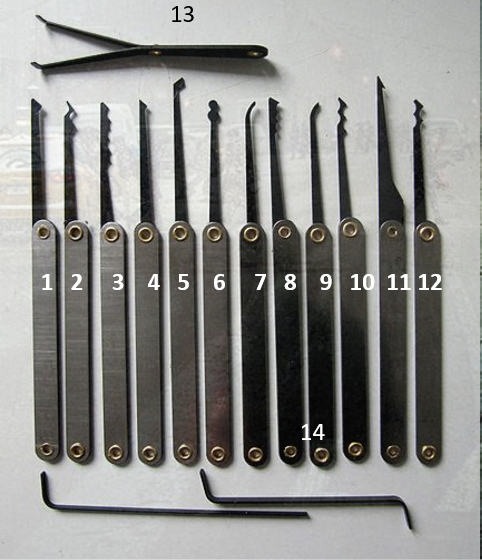
These very nicely shapen tools are known as lock picks. If you’ve played games like Skyrim, Fallout or the new Call of Duty’s, you might be a little familiar with this process. Locks are usually picked using a lock pick and a torsion wrench They have different names depending on their shape.
2–3–8–10–12 Rake
1–4–11 Harpoon/ Diamond
6 Ball
7–9 Hook
14 Torsion wrench
13 ¯\_(ツ)_/¯ I don’t know either
An interesting side note is that in western countries, the luxury consumption of this sector has emerged with the efficiency of purchasing power. Single or multiple lockpick sets are sold using better quality steels or special wood or modern materials. You can find many examples of this on Reddit. Isn’t it awesome?
How Do Locks Work?
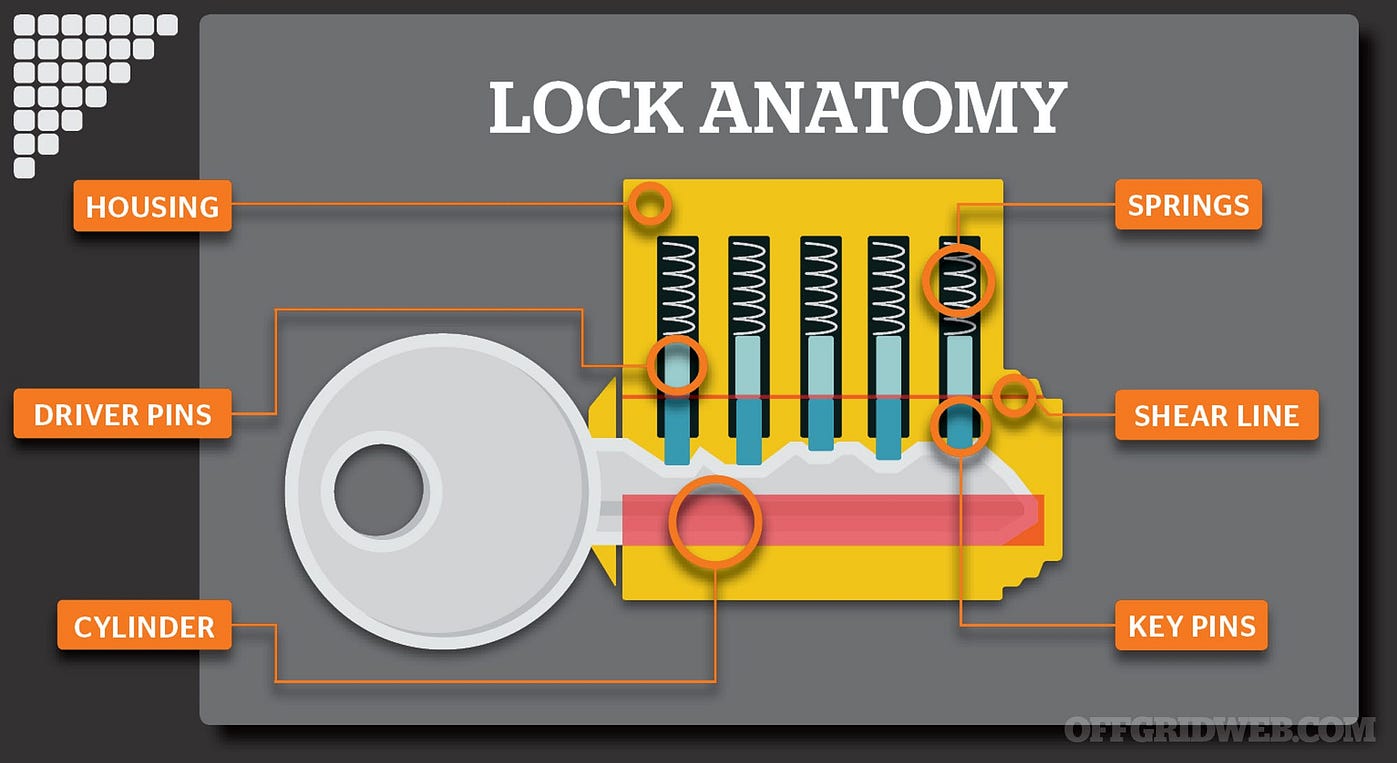
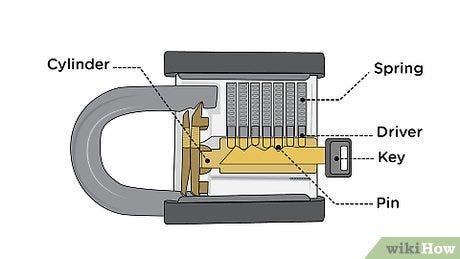
Locks generally consist of pins pushed into place by metal springs in pipelines inside a metal box. When we look at their inside, it sure looks simple and primitive does it?
Each pipeline is the same length. But the length of the driver pins and the key pins are different. The reason the keys have these interesting indented and protruding shapes is that when you insert them into the lock, they put all these pins in the right position to open the lock.
Another feature of keys is that they are multi-use. With a key you can lock and unlock a lock over and over again. If the lock does not have a safety pin, a lock pick can be used in the same way. But breaking the lock renders it unusable again, and this will be noticed by the lock owner.
In fact, we can see a padlock in the picture on the top right. We can see that the system is locked by attaching the shackle (bent bar) to a thin piece of metal. With the same logic as with zip cables, if you can apply an excessive load to the body of the lock (load point B) while the lock is hanging somewhere (load point A), you can open the lock by turning that metal protrusion into a breaking point.
Gently Unlock Using a Lockpick
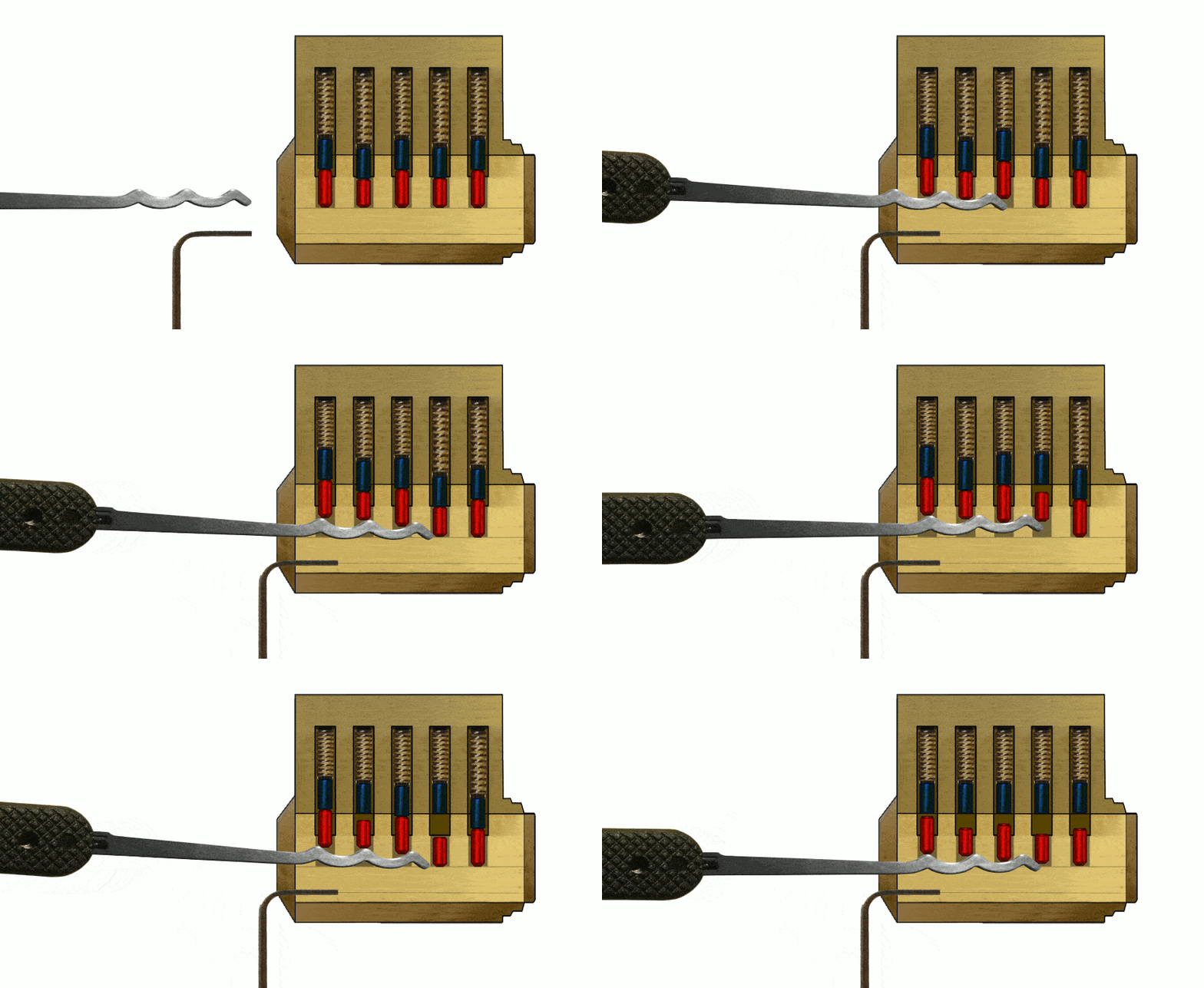
Using a twist key and a lock pick, the lock is opened by first putting the key pins in the correct position for opening with the lock pick and then applying pressure on the direction of rotation of the lock with the twist key.
There are several different techniques for this. One is to use a rake to try to get the pins in the correct position.
Another is to use a rake to quickly insert and withdraw the pick into the lock repeatedly while applying pressure with the twist key. This is a very fast method and is known as the shaking method. As the pins move quickly up and down, the pressure applied by the twist key ensures that when they reach the opening position they are stuck there.
Another method is to use a monkey wrench in the shape of a wave (like the one in the GIF) and apply pressure with the twist key on one side to bring each pin to the open position one by one and keep them in the open position with the pressure of the twist key. When all pins are in the open position, the lock opens.
All these techniques require muscle memory. If you are interested in this topic, you can buy a practice kit, learn more details from youtube videos, develop hand habit and try it on real locks. Generally, cheap and small locks are easier to open. This is because there are fewer pins in small locks due to the volume, but cheap and medium sized locks can be opened quite easily with a little practice. Remember, don’t try it on locks you actively use. Only try it on locks that you are willing to accept being broken because it is always a possibility.
In general, picking locks with a lock pick takes time. It requires a hand habit. It is silent, but you don’t know which way the lock is opening until the moment it opens. It has its own complexity.
Breaking the Lock with Brute Force! For Those Who Say “I’m The Speed”
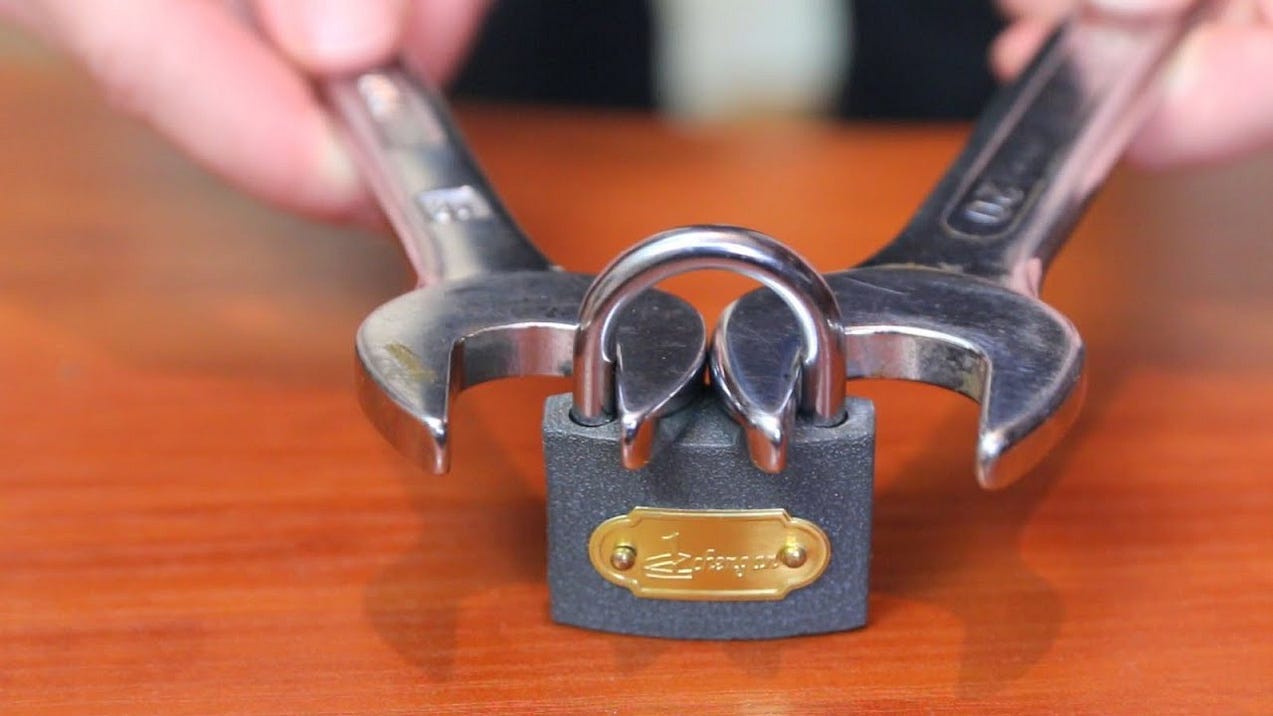
One of the simplest and most popular methods is to break the lock by applying force from two opposite points. One popular method for this approach is to break the lock by applying force with two relatively long wrenches, two of which can enter the cavity of the lock.
Another is to use, for example, a leather belt to break the lock by applying a load opposite to the direction in which the lock is hanging.
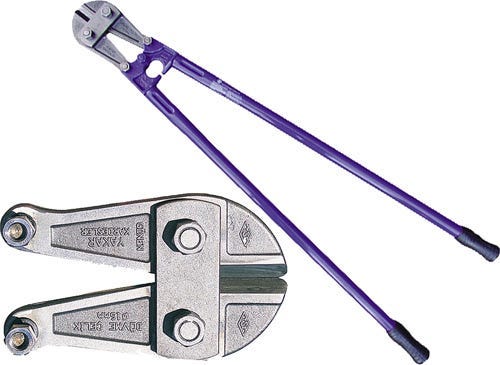
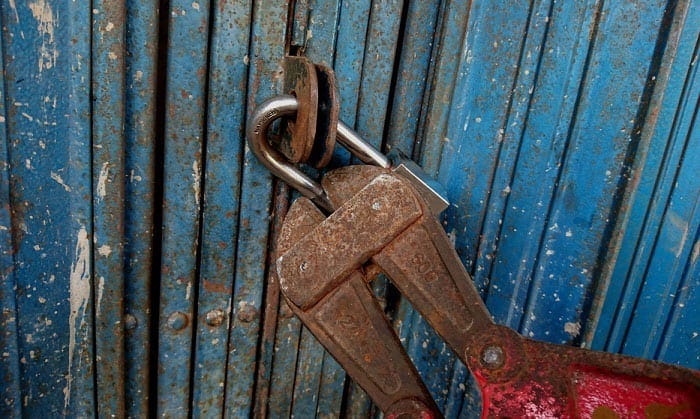
Another popular method is to cut the lock with a pair of iron shears. This method is also quite fast, but the iron shears are quite large due to their work logic. For such a purpose, there are camouflaged bags specially designed to carry iron shears in the civilian world.

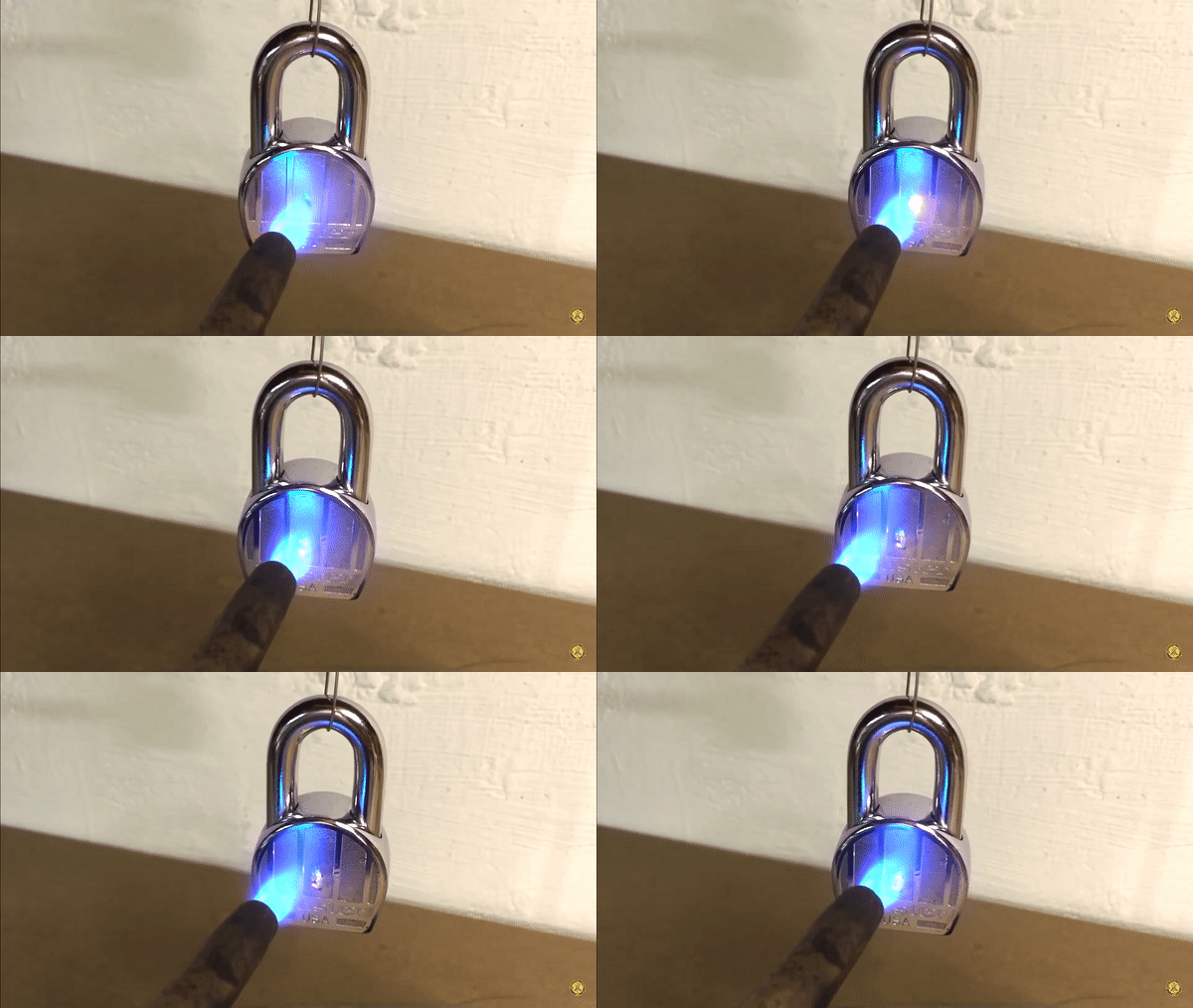
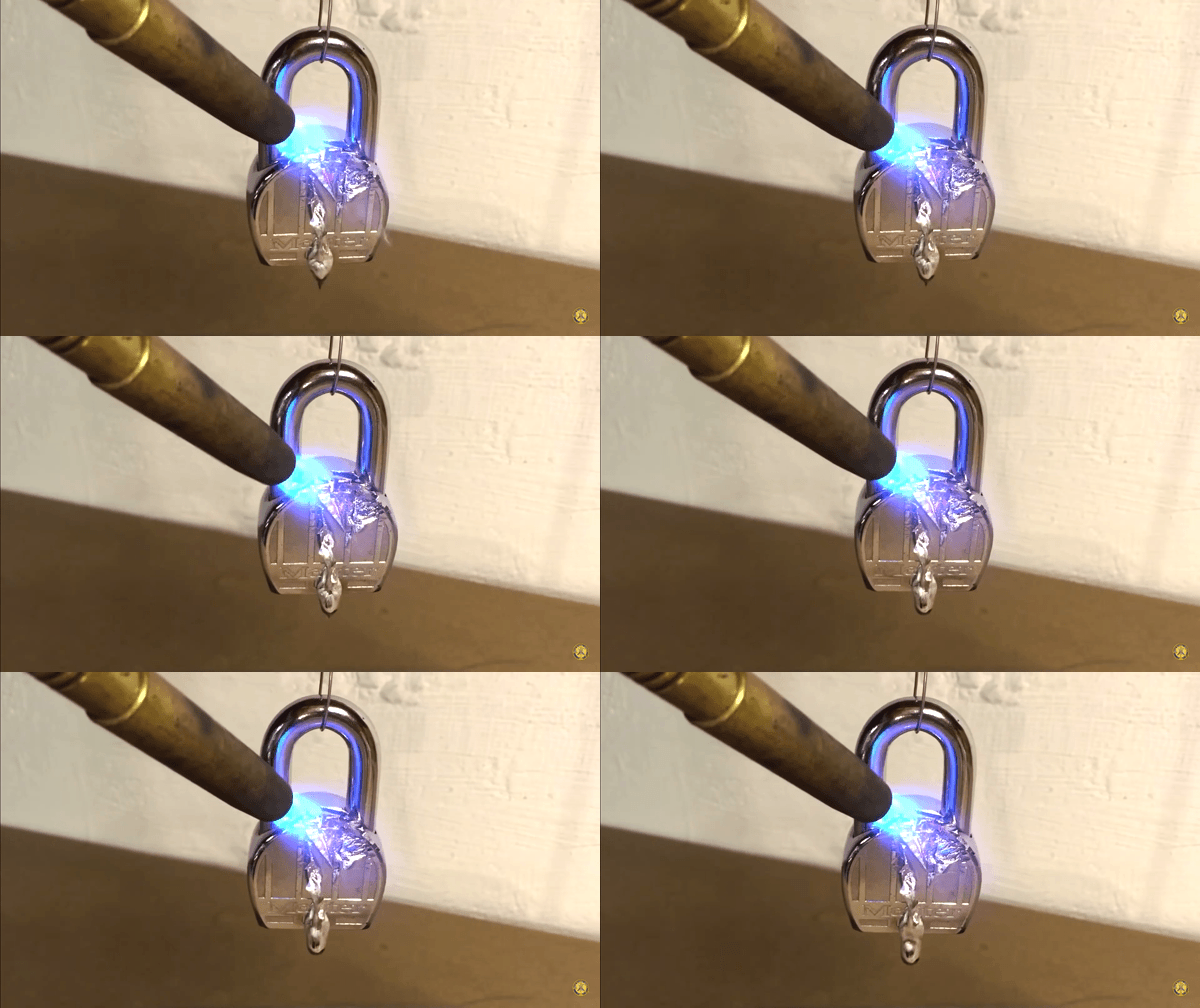
Another unpopular but very interesting method is to melt the lock. This is the one that I personally like the most. You may have seen that there are more advanced methods in the military. It is a very distinctive method in terms of being heard and seen. There is a need for an outlet tool known as a blowtorch that can produce a highly intense heat and a gas source. This is a very effective method in its own, especially when you have to think outside the box.
Maymuncuk Setlerinin Dünyadaki Yasal Durumu
- UK = Illegal (3 years imprisonment)
– Japan = Illegal (500,000 Yen and one year in prison)
– Germany = Legal
– Canada = License required in some provinces, legal in others
– America = Depending on the state. Mostly legal, as a luxury consumption There’s even a custom market.
What Have We Learned?
- In vehicles with locking systems, it is possible to manipulate the way the system works that we can bypass the durability of the vehicle.
- A shock load that an inelastic material cannot withstand that we can get away with applying it.
- In a material that is flexible, we can use this advantage of the material
that we can get rid of it by using it to deform it. - If we make the pins inside the lock system suitable for opening
will be opened and the hardened steel and pneumatic coating on the outside when we push the tiny pins in the right place.
that it doesn’t stay. - A certain amount of flex due to the way the lock is manufactured and the material and if we apply a force in the right direction to the right place that it can no longer withstand the flexing and will break.
- If we don’t succeed with gentle and hard methods, we will have to change all the dynamics. changing a lock with the flame of a blowtorch, regretting that it exists that we can.
Conclusion

- Security is a perception.
- The tools we use to unlock locks and break free from restraints
not iron shears or monkey wrenches. Our tool is actually a way of thinking (mindset). - There is no single solution, sometimes you have to try another tool.
Often the purpose of lock systems is not to stop a thief, but to keep a honest person honest. - Sometimes the lock can be really big, strong and durable, and in those cases; it might be easier to cut the door or break the wall (like the CIA archive scene in the movie Red).
https://www.youtube.com/watch?v=VeGssSFMaRg minutes 2.05–2.27

 Decompress Sec